
How to Check Criminal History in Kenedy County
Start by naming the event and the proof needed. The District Clerk is the first counter for a felony filed in the 105th Judicial District Court. The County Clerk keeps constitutional County Court misdemeanor files. One of four justice courts may hold a fine-only complaint or magistration record. The Kenedy County Sheriff keeps reports created by that office, while the Texas Department of Public Safety holds the statewide criminal history repository. These sources overlap, but they do not answer the same question.
The official Kenedy County homepage shows the courthouse and county office directory. Its courthouse view helps identify the county government hub, but the published clerk and sheriff addresses are split among La Parra Avenue, Mallory, and Cuellar Avenue.

The image reinforces a key search rule: call the exact Kenedy County record custodian before making a rural trip, because “the courthouse” is not a precise counter location.
- Identify whether the target is a booking, agency report, filed case, warrant, custody status, or statewide history.
- Call the proper Kenedy County clerk or sheriff with the full name, spelling variants, approximate year, and cause or report number if known.
- Try re:SearchTX for court metadata, the Kleberg roster for current local custody, or DPS CRS for public statewide conviction and deferred-adjudication data.
- Ask the local custodian for the docket, charging paper, judgment, sentence, report, or booking sheet that supports the online result.
- Order a certified disposition or use the fingerprint-based personal review route when an official self-review or correction needs stronger proof.
Three Kenedy County Record Layers
A booking entry shows intake. A court case shows what prosecutors filed and how the court resolved it. A DPS criminal history shows the public statewide portion that contributing agencies reported and state law permits DPS to disclose. Confusing these three layers causes many false conclusions. An intake charge may be amended, rejected, or replaced. A court dismissal may be accurate even while a disposition update has not yet linked to the fingerprint transaction at DPS.
| Record layer | Best source | Main answer |
|---|---|---|
| Booking and custody | Kleberg roster, then Kenedy Sheriff | Where the person entered custody and current or recent status |
| Criminal case | District, County, or Justice Court clerk | Filed charge, docket events, judgment, and sentence |
| State criminal history | Texas DPS | Publicly disclosable convictions and deferred adjudications reported statewide |
When facts conflict, get the local disposition and the agency record tied to the same cause and tracking numbers. The originating office can confirm its own entry, while DPS provides the challenge route for a statewide record.
Official Texas Background Checks
The Texas DPS Criminal History Conviction Name Search is the public name-based product. An account holder buys credits, and each search uses one $1 credit even when no match appears. A credit-card purchase adds 2.25 percent per credit and a 25-cent transaction fee. Searchers should use a full first and last name rather than initials or nicknames. Middle or maiden name and a full or partial birth date can narrow candidates. Soundex matching can surface close spellings, so identifiers must be compared with care.
The DPS public criminal history site is the official entry point for that limited public product.
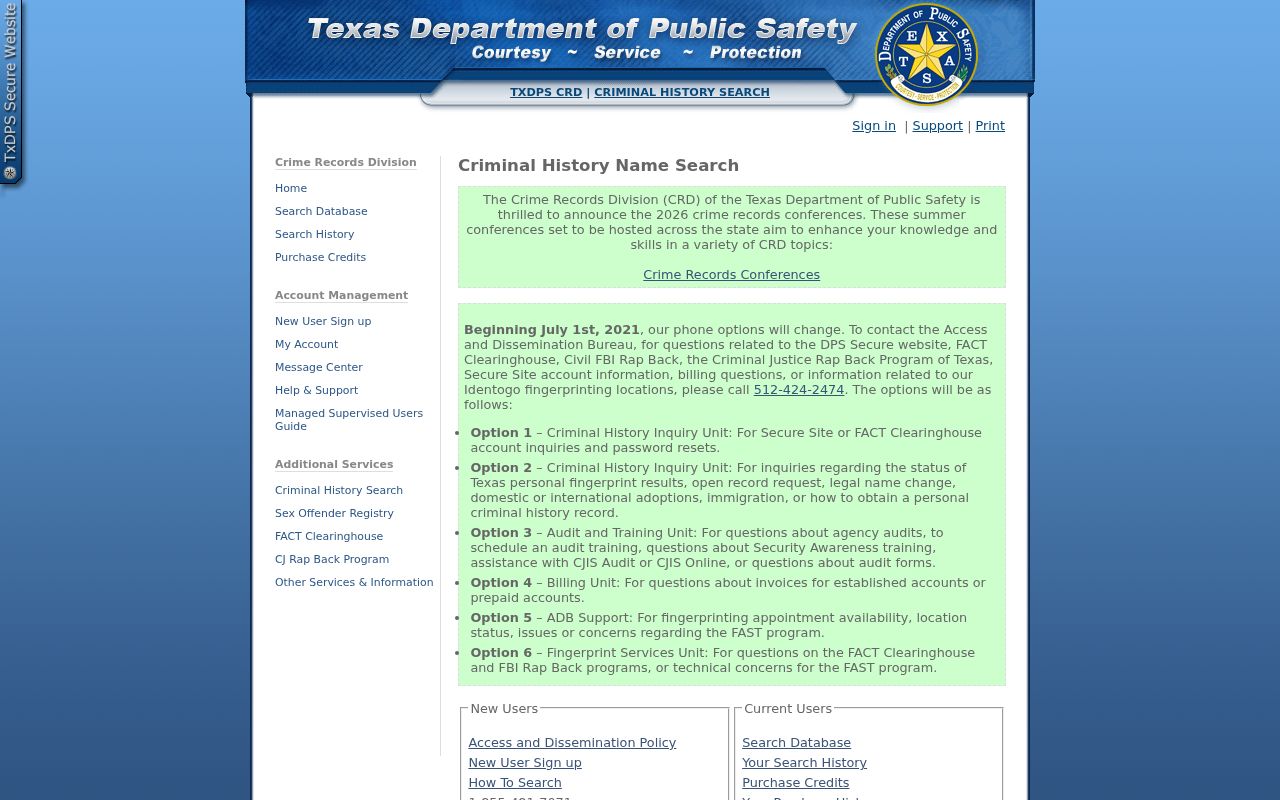
This login view is not a promise of a complete rap sheet. Nonconviction information is generally restricted, and a local record may be missing because of reporting, matching, or legacy-file issues.
| DPS field | Use | Matching note |
|---|---|---|
| Last and first name | Main name search | Use full legal spelling |
| Middle or maiden name | Narrow results | Optional but recommended |
| Date of birth | Separate similar names | Full or partial date may help |
| Sex and race | Compare identifiers | Use as matching details, not assumptions |
Kenedy County Fingerprint Self-Review
A person seeking the most complete review of their own Texas record should use the DPS fingerprint process instead of treating the public name search as complete. Texas Fingerprint Applicant Services uses IdentoGO by IDEMIA. The DPS personal-review service code is 11FT12. The researched DPS form lists a $10 fingerprint fee and a $15 criminal-history fee, for a $25 total. Kenedy County does not publish a local enrollment center, so residents should use the live location finder and confirm the nearest active site.
The official FAST and IdentoGO appointment portal handles the service-code search and scheduling.
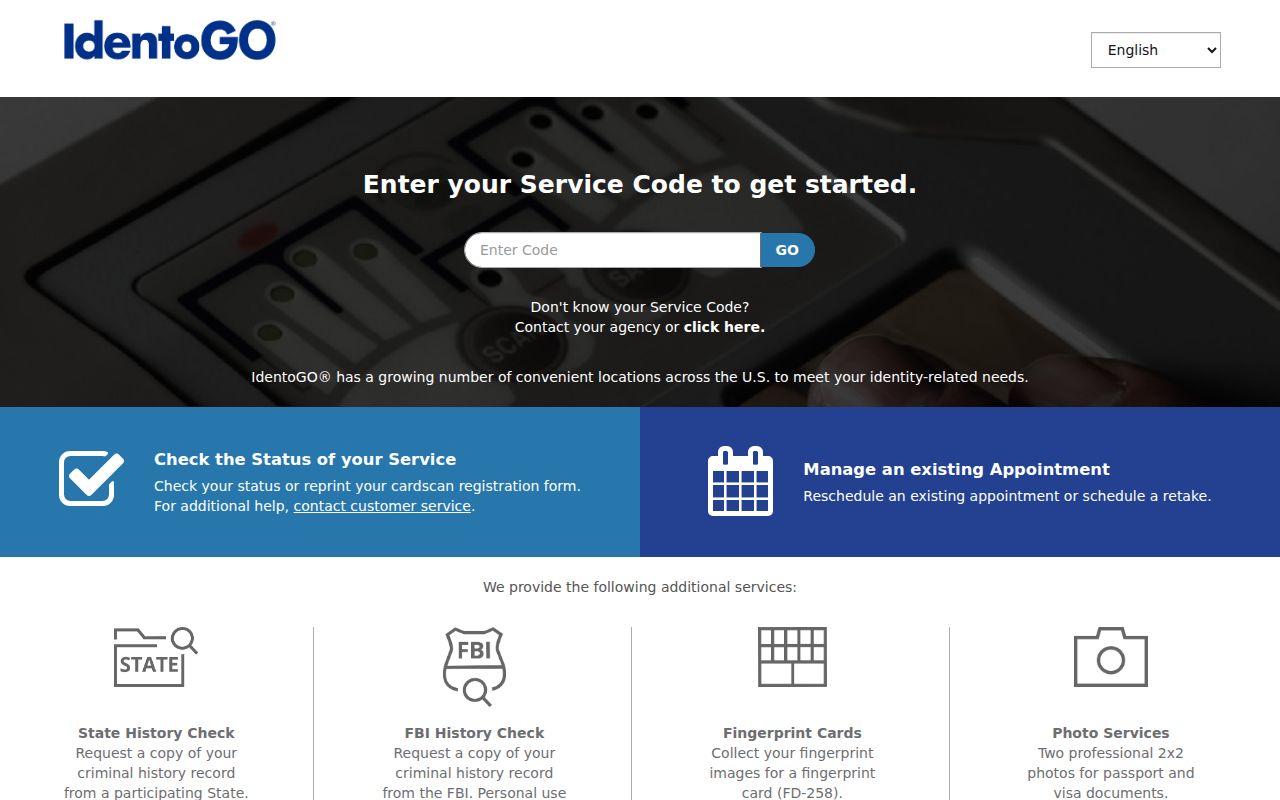
The appointment record includes a UE ID. DPS will not use prints more than 30 days old, and its instructions say to make contact if no result arrives within 14 days after fingerprinting.
Federal self-review is separate. The FBI electronic ordering portal supports an Identity History Summary request by the subject.
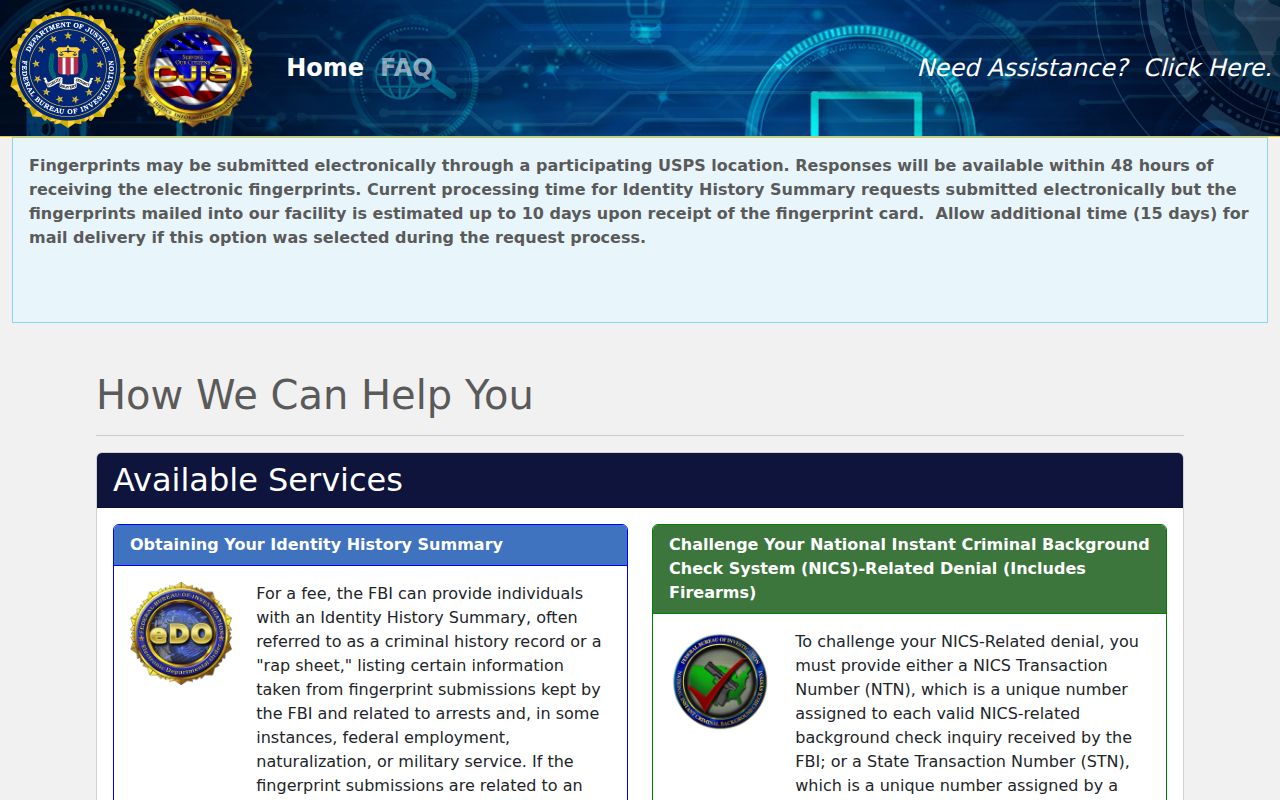
That federal route requires fingerprints and should be checked against current FBI instructions for fee and processing details.
Types of Criminal Records
Each Kenedy County record begins with a different act. A deputy writes an incident or arrest report. Receiving-jail staff create booking data. A prosecutor chooses a filed charge, and the clerk opens the court file. DPS connects reportable arrest and disposition data. A judge may issue a warrant, judgment, or supervision order. The public sex offender registry and TDCJ inmate record are specialized systems, not substitutes for the county case file.
- Incident and arrest reports: agency narratives and event details requested from the office that created them.
- Booking and custody records: intake, charge, bond, hold, and release or transfer information.
- Court case files: filed allegations, motions, hearings, pleas, judgments, sentences, and dispositions.
- Warrant records: judicial authority that must be verified with the issuing court and sheriff.
- State and federal records: DPS history, TDCJ or BOP custody, and federal court dockets.
Kenedy County Records Cross County Lines
Kenedy County has no operating county jail and boards local detainees in adjacent Kleberg County. Its sheriff page sends custody searchers to the official Kleberg roster. Felony cases stay in the Kenedy County file series, even though the 105th Judicial District spans Kenedy, Kleberg, and Nueces Counties and the district attorney works from Kingsville. One arrest can therefore involve a Kenedy report, a Kleberg booking, a Kenedy cause number, and a statewide DPS transaction.
The shared 105th District Attorney page documents the prosecutor’s Kingsville contact.
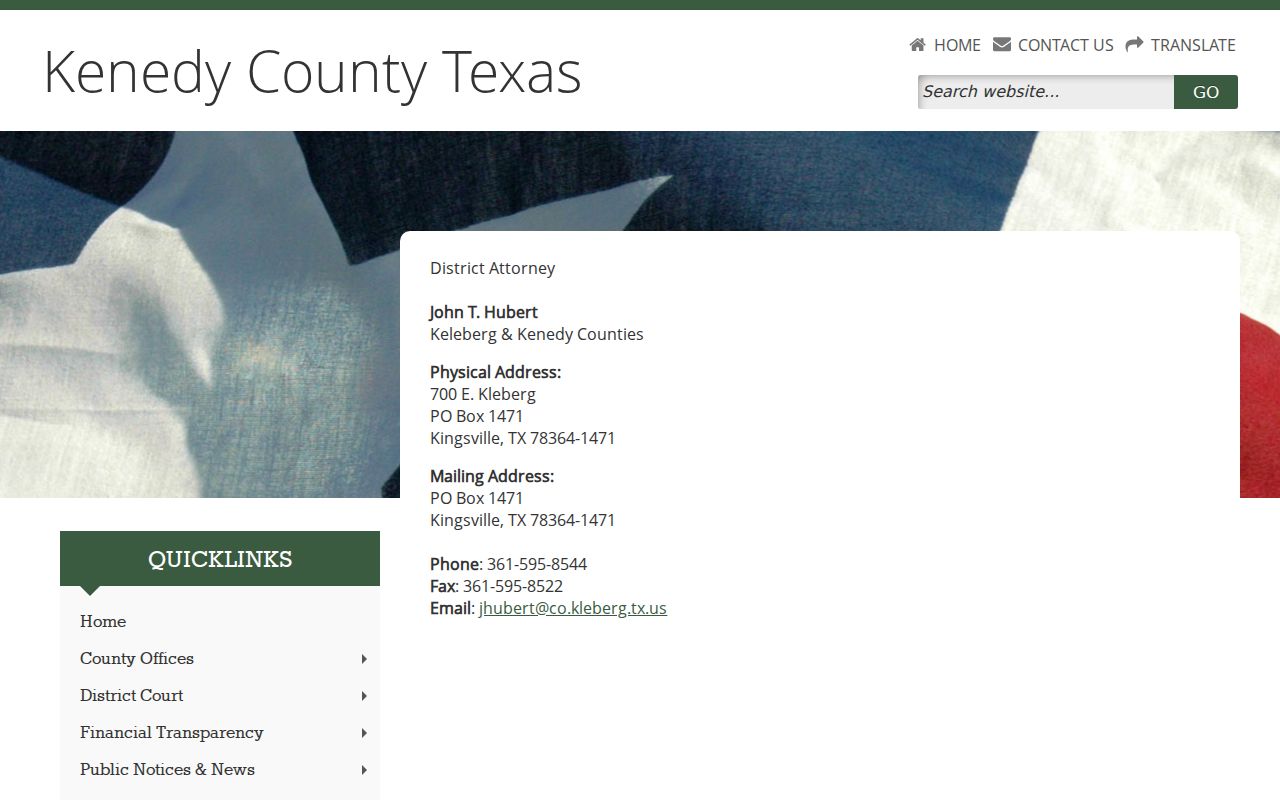
This cross-county office location does not move the certified felony file. The Kenedy District Clerk remains the local file counter.
The Kenedy County Attorney page identifies the county-level prosecution office.
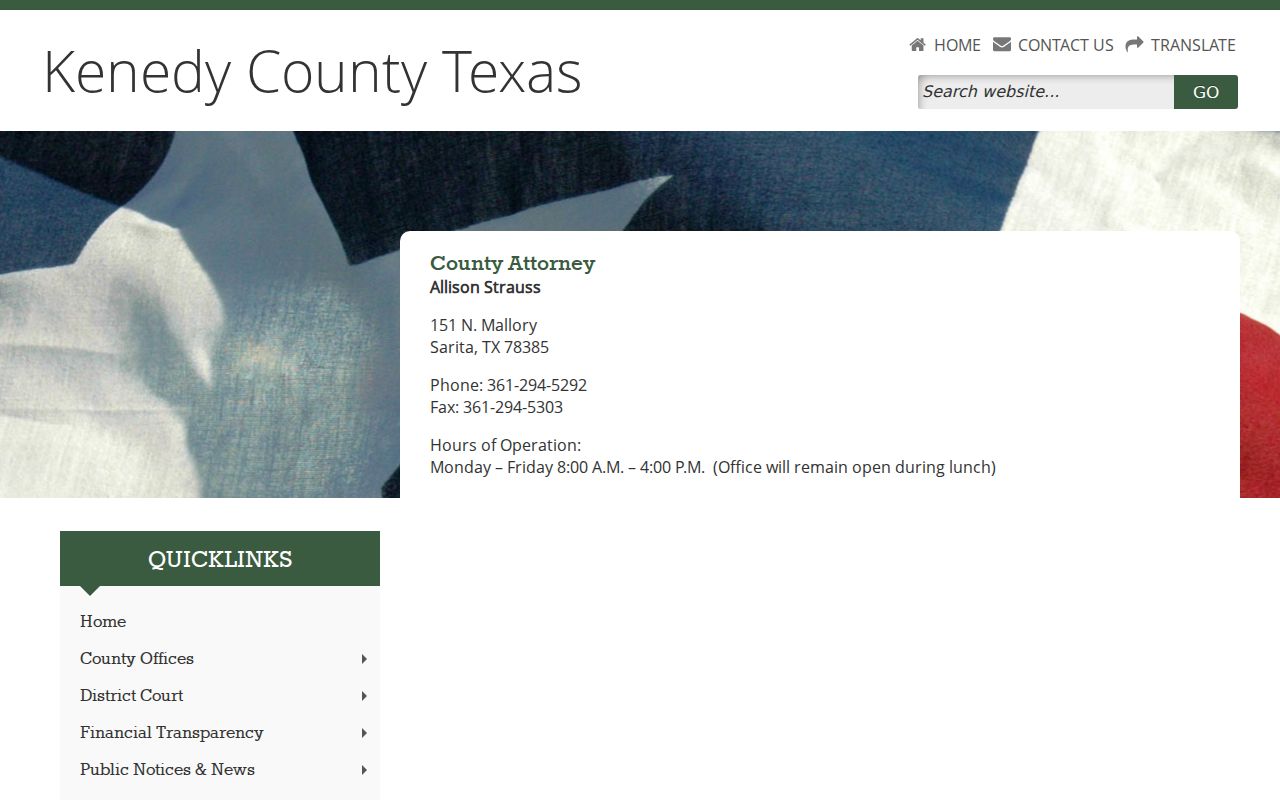
The County Attorney is part of the misdemeanor charge pipeline, while the County Clerk is the record custodian for the filed case.
What a Kenedy County Criminal Record Shows
A Texas computerized history can connect identity details to an arrest cycle, prosecution, disposition, and sentence. The local case file adds cause-specific pleadings and docket events. Public access varies by record and law. A field that is blank may mean the data was not reported, was not integrated, is restricted, or does not apply. It should not be read as proof that the event never occurred.
| Name & Identifiers | Legal name, aliases, date of birth when available, and SID, FBI, or tracking numbers. |
|---|---|
| Arrest / Booking Data | Arrest date, agency, initial offense codes, booking time, holds, and intake status. |
| Charges & Statutes | Filed complaint, information, or indictment and the cited Texas offense. |
| Disposition | Dismissal, acquittal, plea, deferred adjudication, or conviction as reported. |
| Sentence | Jail or prison term, fine, community supervision, and court conditions when public. |
| Custody / Supervision | Current facility or release projections in the proper custody system, not always the court file. |
For a wrong or missing disposition, obtain a certified Kenedy County order and follow the DPS record-review and challenge instructions. A website printout is not the proof DPS asks a contributing agency to reconcile.
Choose the Right Kenedy County Custody Search
Use the Kleberg roster for boarded local detainees, TDCJ for people serving a Texas state sentence, and the Bureau of Prisons locator for federal custody. A person can move between systems over the life of a case. A disappearance from the current roster can mean release or transfer, so check Kleberg’s 48 Hour Release view and request archived material when needed. TDCJ also offers free inmate information by email using a TDCJ number or identifying details.
The official Bureau of Prisons locator searches federal custody by federal number or personal identifiers.
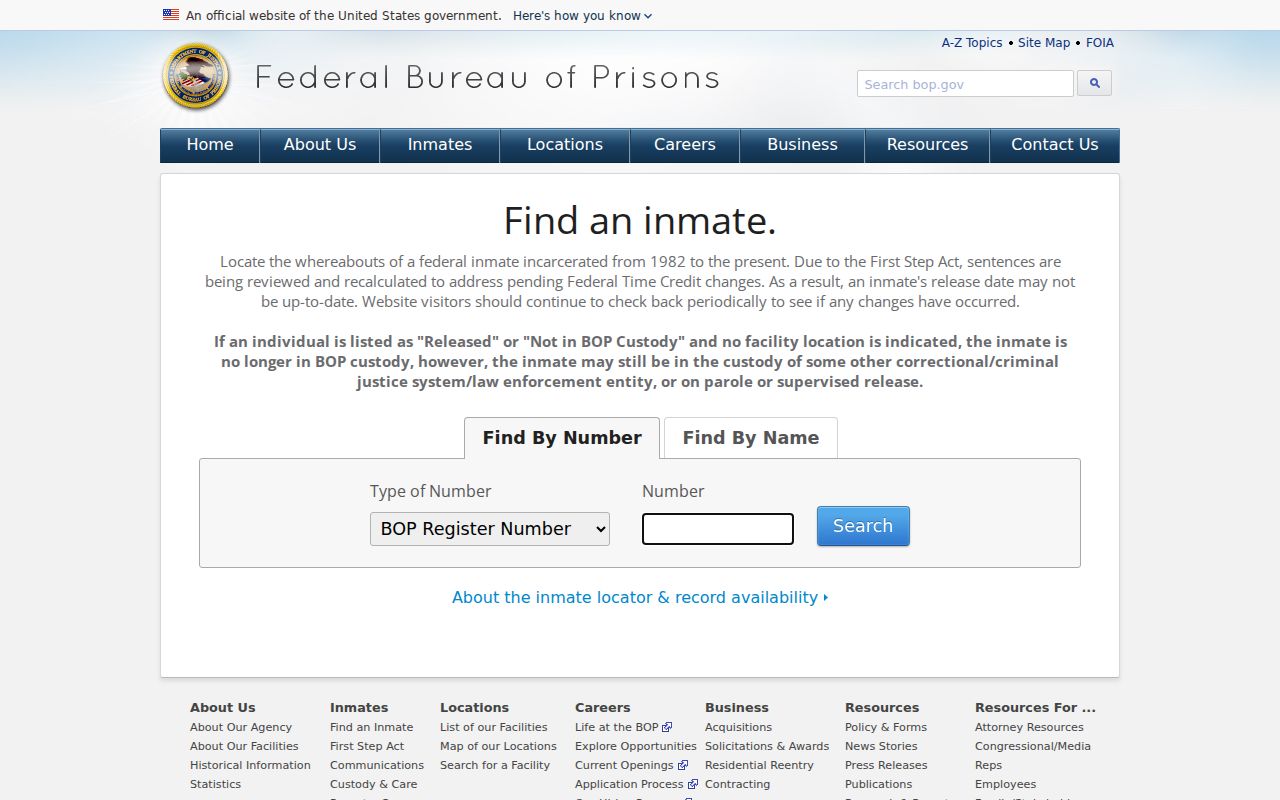
Federal results show federal location and release data, not a Kenedy County booking sheet or local judgment.
Public Access Laws
The Texas Public Information Act governs many records held by executive agencies, but criminal history and judicial records have added rules. Government Code Chapter 552 supplies the general right of access and permits exceptions, including law-enforcement material whose release could interfere with an investigation or prosecution. DPS-maintained criminal history is confidential unless another law authorizes disclosure. Court case records may follow clerk and judicial-record procedures instead of the TPIA in the same way as a sheriff report.
Key Texas laws:
Government Code Chapter 552 sets the public-information baseline and its exceptions.
Government Code Chapter 411 controls DPS criminal-history confidentiality, public conviction data, and nondisclosure.
Code of Criminal Procedure Chapter 66 governs criminal justice data reporting.
Code of Criminal Procedure Chapter 55A sets current expunction routes.
A clear request identifies the event, date range, location, report number, records sought, and preferred format. Kenedy County publishes no sheriff request form, online portal, standard copy fee, universal turnaround, or general ID rule.
Kenedy County Sheriff Request Channels
The sheriff’s administrative counter is at 175 Cuellar Avenue in Sarita and operates Monday through Friday from 8:00 a.m. to 4:00 p.m. Call (361) 294-5205 first. Mail can be sent to P.O. Box 10, Sarita, TX 78385. The main fax is (361) 294-5260, and the administrative fax is (361) 294-5209. No public request email appears on the county page, so confirm which fax is preferred before sending a request.
Texas Attorney General guidance explains the state request process. The Act’s ten-business-day rule is mainly the time for an agency to seek an Attorney General ruling when it wants to withhold information. It is not a universal ten-day production promise.
Kenedy County Sheriff
175 Cuellar Avenue
Sarita, TX 78385
(361) 294-5205
Weekdays, 8:00 a.m.-4:00 p.m.
District and County Clerks
101/151 Mallory
Sarita, TX 78385
(361) 294-5220
Weekdays, 8:00 a.m.-4:00 p.m.
Sealed, Expunged & Restricted
Texas expunction and nondisclosure do different work. Chapter 55A expunction generally directs covered agencies to return, delete, or destroy records, subject to the statute. An order of nondisclosure limits public release but allows criminal justice agencies and other authorized entities to retain access. Eligibility turns on the exact offense, result, date, and prior history. A dismissal alone does not make a record vanish.
Kenedy County’s District Clerk page provides an expunction route, but no local filing fee is posted. The usual preparation includes a DPS self-review, certified dispositions, accurate cause and tracking numbers, and a list of every arresting, booking, prosecuting, and repository agency. The current statute moved to Chapter 55A on January 1, 2025, so older guides should be checked against current law.
The official Texas expunction chapter is the source for present eligibility and procedure.
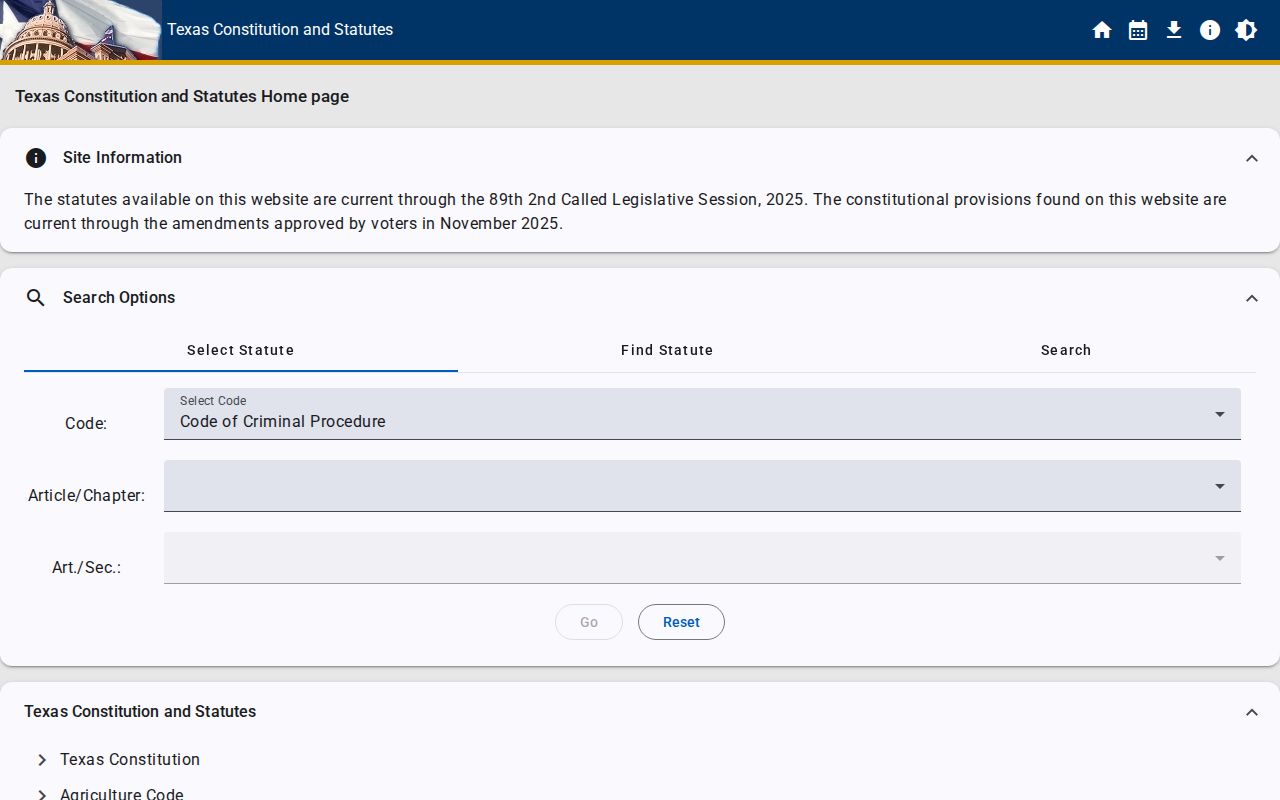
The statute confirms why a local search result, a DPS entry, and a court order must be matched before anyone assumes a record is cleared.
Federal Criminal Records Near Kenedy County
Kenedy County lies in the Corpus Christi Division of the Southern District of Texas. Federal criminal dockets are searched in PACER, not re:SearchTX. PACER registration is free, use is generally billed at 10 cents per page, and many single documents or case reports are capped at $3. A quarterly bill of $30 or less is waived under the researched fee schedule. Sealed and redacted material is not available to the public.
The official PACER portal handles federal docket registration and access.
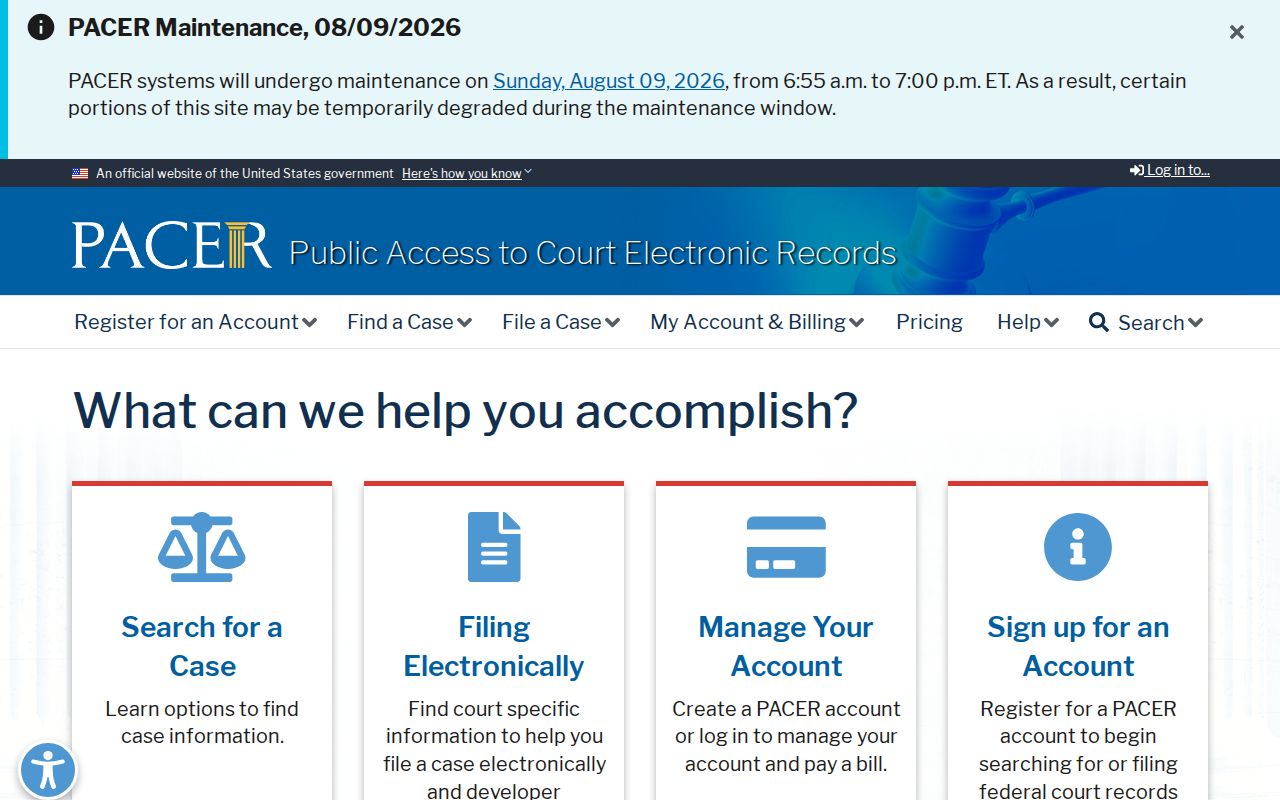
PACER searches can incur a page charge even without a match, so use a clear party name and the correct Southern District division.
The Southern District of Texas website identifies the federal court serving Kenedy County.
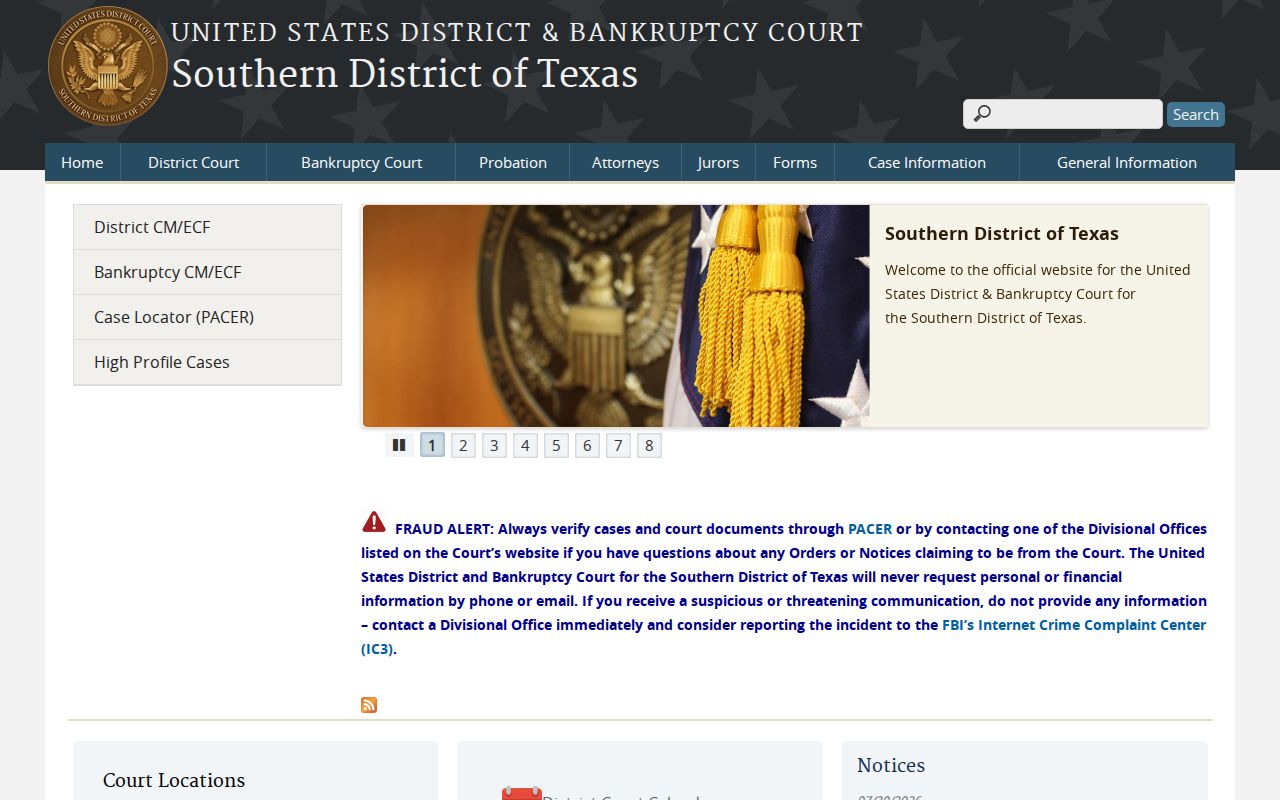
The Corpus Christi courthouse and federal agencies hold their own records. They are not substitutes for Kenedy County clerk files.
Kenedy County Warrant Verification
Kenedy County publishes no active-warrant database or most-wanted list. TCIC and TLETS are law-enforcement tools, not public portals. Call the sheriff, identify the issuing court, check all four justice courts for fine-only or failure-to-appear matters, and check the County or District Clerk for a prosecution-related capias. Request public information when it is releasable. Juvenile, sealed, or unexecuted investigative warrants may be withheld.
- Arrest warrant
- A magistrate’s command based on a probable-cause finding.
- Bench warrant or capias
- A court order that may follow nonappearance or another court directive.
- Capias pro fine
- Process used after judgment in a fine-only case.
- Search warrant
- Authority to search a place or property, not a wanted-person list.
Online justice-court payment is not proof that a warrant was recalled. Confirm the cause, charge, court, bond terms, and cleared status with both the court and law enforcement.
Kenedy County Charges by Court
Felonies belong in the 105th District Court. Class A and B misdemeanors generally proceed in the constitutional County Court. Class C misdemeanors are fine-only matters handled by a justice court because Kenedy County has no municipal court. Portal abbreviations such as F1, F2, F3, FS, MA, MB, and MC describe charge levels. They do not by themselves show the final outcome or account for enhancement rules.
The 105th Judicial District has a statutory preference for criminal cases and spans three counties. The shared structure affects where judges and prosecutors work, but the Kenedy County clerks keep the Kenedy file series. Both clerk roles publish the same phone and fax and are held by the same official, yet district felony and county misdemeanor records remain legally distinct.
Criminal Records by City in Kenedy County
Kenedy County has no incorporated cities, so there are no city criminal-history pages, municipal police departments, municipal courts, city report portals, or city booking logs to add. Sarita is the county seat and a Census-designated place, not a city. Armstrong, Norias, Rudolph, and Mifflin are also unincorporated communities. The City of Kenedy is in Karnes County and is unrelated to Kenedy County records.
Local policing therefore starts with the Kenedy County Sheriff, while fine-only cases go to the county’s justice courts. Using “Kenedy County” and “Sarita” in a search helps avoid results from the unrelated City of Kenedy. A blank city list is intentional here and reflects official Census geography, not an omitted Kenedy County records source. It also prevents municipal court or police claims from being attached to an unincorporated Kenedy County community.