
Running a Sex Offender Check in Kenedy County
The Texas Public Sex Offender Registry is the primary public search channel for Kenedy County. Texas DPS maintains the computerized database under Code of Criminal Procedure article 62.005. It is a focused registration source, not a general criminal-history product. Begin there when the question concerns a registrant's published address, registration status, reportable offense, or descriptive details. Use the county filter when the person's name is not known, or combine a name with a location field to reduce false matches.
Local follow-up belongs with the Kenedy County Sheriff's Office. The county does not publish a separate registry list, map, app, alert signup, registration calendar, or compliance unit page. A person who needs current local confirmation should call the sheriff before visiting. When the goal is to understand the prosecution behind an offense entry, the registry is only the starting point. The resulting judgment and docket remain part of the Kenedy County criminal court case record.
Kenedy County Registry Geography
Location searches work differently here because Kenedy County has no incorporated city. Sarita is the county seat and a Census-designated place, not a municipality. A search limited only to a city list can therefore miss the county's rural context. Choose Kenedy in the County field. A second search may use Sarita, ZIP code 78385, an address, or a radius that the live portal currently offers. The radius values can change, so rely on the controls shown during the search rather than a saved set of distances.
The name itself is another trap. The City of Kenedy lies in Karnes County and is unrelated to Kenedy County. Pair “Kenedy County” with “Sarita” when checking a location. That small detail keeps the search centered on the right jurisdiction and avoids treating a city result from another county as local. The county's official website can also confirm current office notices before a local follow-up.
Searching the Texas Public Sex Offender Registry
The DPS search supports both name and location routes. The registry requires acceptance of its conditions and warning before results are shown. Gather the most exact name spelling and location facts available, but do not assume every field must be filled. A broad county search can establish the local result set, while a name plus middle name or address can narrow it.
- Open the official DPS registry and accept the current conditions of use.
- Choose a name search, or use the address, city, county, ZIP code, and radius route.
- Set the county to Kenedy and use Sarita or 78385 when a more local filter is useful.
- Review the result list, open the matching profile, and check status, offense, address, and verification details together.
The available controls documented for the Kenedy County registry route are listed below. Portal layouts may change, so a field marked optional can still be useful even when it is not required.
| Field or Control | Type | Required | Use |
|---|---|---|---|
| Last Name | Text | Route-dependent | Starts a name search |
| First / Middle Name | Text | Optional | Narrows similar names |
| Address | Text | Location route | Supports an address-area search |
| City / County | Text or dropdown | Optional | Use Sarita and select Kenedy |
| ZIP Code / Radius | Text and dropdown | Optional | Use 78385 and a live radius choice |
| Search / Reset | Buttons | No | Runs or clears the query |
Kenedy County Registry Verification
DPS publishes the statewide record, but local registration and compliance questions go to the Kenedy County Sheriff's Office. Its official contact page lists the Cuellar Avenue office and weekday administrative hours. No separate registration schedule or appointment rule is posted. Call first, state that the question concerns Chapter 62 registration, and ask when the appropriate staff member is available.
Kenedy County Sheriff's Office
175 Cuellar Avenue
Sarita, TX 78385
(361) 294-5205
Monday-Friday, 8:00 a.m.-4:00 p.m.
The sheriff is also the right local contact for suspected noncompliance. Give the observed facts without trying to confront anyone or draw conclusions from a stale screen. The office can determine whether the concern falls within its local role or should be routed to DPS. The county does not advertise a registry fee, mobile app, proximity alert, or public compliance calendar.
The DPS registration program page provides the state source behind those duties.
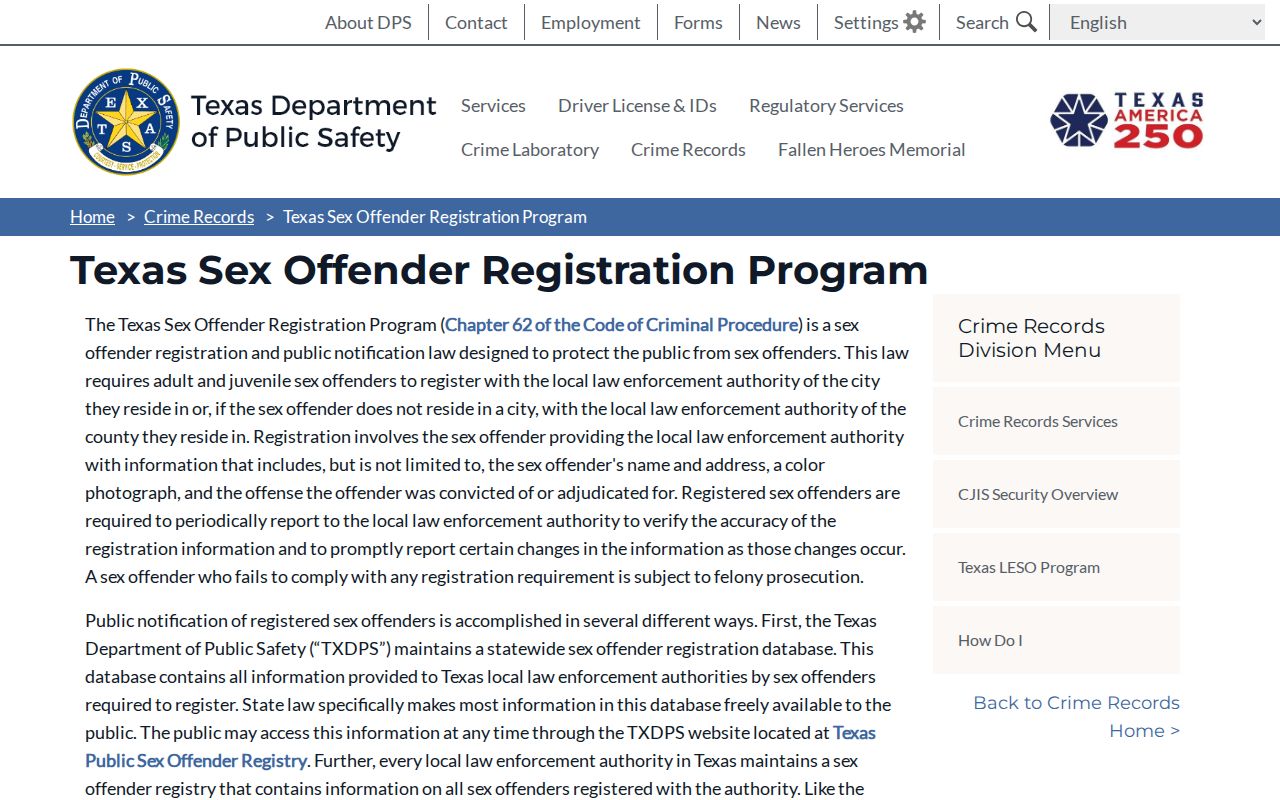
That program material supplies the statewide framework that the Kenedy County Sheriff's Office applies during local registration and verification.
What a Registry Profile Shows
A public profile combines identification, location, offense, and registration fields. Read them as a set. The screen may show a name and aliases, photograph, physical description, marks or tattoos, address or other published location, vehicle details, and registration status. Offense and conviction fields explain why a duty exists, while verification data helps show when the registration record was last handled. Texas law controls which school, institution, or work information is public.
| Name and Aliases | Published identity variants used to distinguish similar names |
|---|---|
| Photo and Description | Photograph, age or birth data, build, hair, eyes, and visible marks when populated |
| Address or Location | Residence or other location information made public by statute |
| Offense Details | Reportable offense, statute, and conviction or adjudication date |
| Vehicle and Other Sites | Vehicle, institution, school, or work fields when legally public and supplied |
| Status and Verification | Registration or compliance status, registration date, and verification data when available |
An empty field does not prove that the fact does not exist. It may be inapplicable, withheld by law, not supplied, or not populated in the public view. No individual Kenedy County registry profile should be copied as a sample. Field labels are enough to explain how the official record works. When a felony judgment must be checked against the offense entry, the county's District Clerk contact page identifies the local file counter.
Kenedy County Registry Versus NSOPW
The Texas registry is the stronger first source for a Kenedy County search because DPS owns the state record and exposes Texas-specific detail. The National Sex Offender Public Website, known as NSOPW, searches participating jurisdictions across the country. It helps when a person may have moved across a state line or when a location check should reach beyond Texas. It does not replace a close reading of the DPS profile or direct confirmation from the registering agency.
The official NSOPW search provides the national layer used alongside the Kenedy County registry.
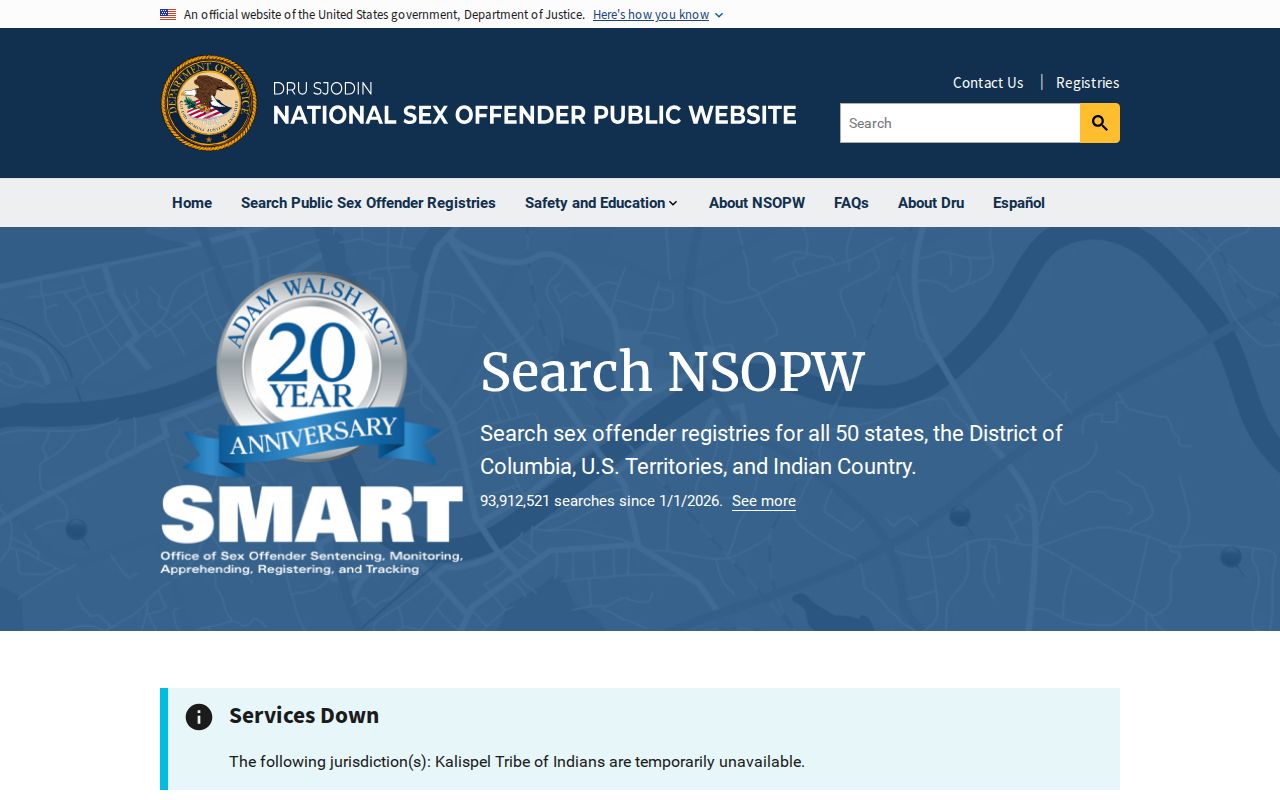
Use its results to identify the responsible jurisdiction, then return to that jurisdiction's official registry for the most specific record and contact path.
Run both searches separately. A difference may reflect update timing, jurisdiction rules, or the public fields each system receives. It is not proof that one screen is false. For Kenedy County facts, DPS and the sheriff remain the verification chain.
Registration Requirements and Levels in Texas
Texas duration rules are offense-based. The state does not assign every person a simple public federal Tier I, II, or III label that can be used as a shortcut. Code of Criminal Procedure article 62.101 ties the length of registration to the reportable conviction or adjudication, prior history, and the event that starts the duration clock. Many listed serious offenses create a lifetime duty. Other reportable matters generally continue until ten years after the latest of release from a penal institution, discharge from community supervision, or dismissal of proceedings.
| Texas Category | General Duration | Key Limit |
|---|---|---|
| Article 62.101(a) listed duties | Life | Exact offense and prior history control |
| Other reportable convictions or adjudications under 62.101(b) | Generally 10 years after the latest triggering date | Release, supervision discharge, or dismissal date controls the start |
| Civil commitment or sexually violent predicate | Specialized lifetime consequences | Current statute and profile must be checked |
Juvenile, young-adult, and early-termination provisions follow special rules. Verification can also occur more often for sexually violent offenses and some repeat duties. Use the exact offense statute and current Chapter 62 text instead of inferring a duration from a generic label.
The current Chapter 62 text is the source for those Kenedy County registry duties.
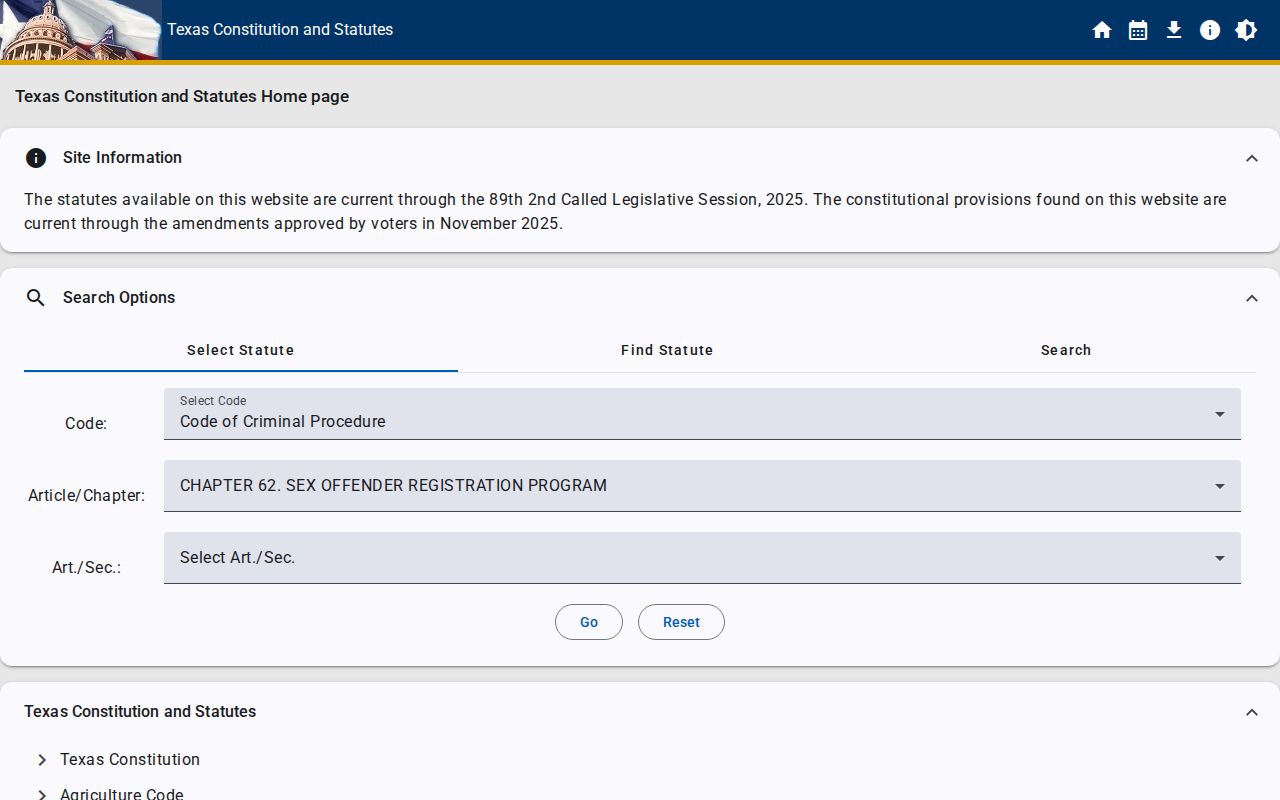
The statute shows why the conviction and duty fields matter more than an assumed three-tier label.
Kenedy County Registry Address Checks
If an address appears stale, first confirm that the profile was matched to the right person and read the status and verification fields. Then rerun the location search with Kenedy County, Sarita, the ZIP code, and any radius option shown by DPS. A move, correction, delayed public update, or jurisdiction change can affect what appears. NSOPW may help identify a new state, but it is still a pointer to the agency record.
Report a concrete compliance concern to the Kenedy County Sheriff's Office. State what was observed and which official profile was reviewed. Do not treat an unfilled field or an old screen capture as proof of a violation. DPS warns that registry information can change, so current agency verification is the sound last step.
Kenedy County Registry Residence Rules
Texas does not impose one residence-distance rule that applies in the same way to every registrant across the state. Conditions of parole or community supervision can impose limits, and a local ordinance may matter in some places. Research found no Kenedy County ordinance setting a countywide distance rule. The absence of a posted ordinance does not erase a court order or supervision condition tied to one case.
Do not infer a legal breach from a map pin near a school, park, or other site. Ask the sheriff which rule applies to the registration question, or consult the judgment and supervision terms when they are part of one's own case. This distinction is vital in rural Kenedy County, where map distance alone cannot reveal the legal source or scope of an individual duty.
Lawful Use and Community Notification
Registry data supports personal and community safety. It should be used to understand the published record, confirm a location through official channels, and make informed safety plans. Kenedy County does not publish a separate email or proximity-alert service, so the practical public channels are the DPS registry, NSOPW for a national supplement, and direct sheriff contact. Verify the live record before relying on saved or shared copies.
Misuse warning: Texas Code of Criminal Procedure article 62.005 warns that using registry information to commit a crime can result in prosecution under applicable law.
Chapter 62 also creates criminal penalties for a registrant's failure to comply, but that is a law-enforcement determination. Send suspected noncompliance to the sheriff with specific facts. Public registry access does not grant authority to investigate, confront, or punish another person.